Sometimes a book from my men's book club makes it into the blog and more times than not, it doesn't. There's only so many times you can read about WWII and the Civil War (ours, not any other country's). However, we have members who like a lighter read and their nomination sometimes makes it through the voting. This is one of those, and I'm glad it made the cut.
Bill Bryson is a good and prolific writer. Previously he generated a best seller on his walk over a large portion of the Appalachian Trail called "A Walk In The Woods". He generated this book in time for the 2000 Sydney Olympics. Over the span of multiple visits, he experienced all the major Australian cities and quite a few road houses throughout the country to give a humorous and reasonably factual look at this large country (about the size of the U.S. lower 48) with somewhat fewer people than live in Canada.
The result is a fun read that is worthwhile even if you never visit Australia. Having gone there once and seen just a little of what he writes about, he captures the essence of the country nicely. His description of their maddening little flys is just right. His description of all the snakes, spiders, plants, aquatic animals and who knows what else that can kill you in an instant is right on target. When Jackie and I visited a remote park with a sign of all the dangerous denizens within, we could encounter not only something called a Death Adder, but a different snake called a Common Death Adder. Somehow knowing something with death in the name is that common was a bit off-putting. Bryson has many stories giving Australia its due as a country to be respected and admired, and you'll probably laugh out loud a number of times while reading them. A good summer read.
Tuesday, May 12, 2015
Monday, May 04, 2015
The Road to Character by David Brooks
The New York Times columnist David Brooks has tackled a thorny subject by discussing character but has done a good job of getting the reader to understand what has characterized the term from antiquity to now. It has varied with time, yet those individuals he has highlighted have some commonalities, most notably a dawning awareness of personal shortcomings that must be addressed in order to live a better life.
Since none of us are fully self aware and "a better life" does not have the same meaning for everyone, Mr Brooks can not give us the approved solution for arriving at the goal. He does give you some wonderful personal life stories of soldiers, philosophers, government and social workers and more that help him construct a possible path to a better character. You might not like some of them, agree with their politics or philosophies, or find some of their choices to arrive at what they considered their better selves to be right for you, but the sum of the stories does support the idea that having good character requires an understanding of what you've been given (not earned), a humility that comes from that understanding and a decision to focus on others more that yourself. Although he did not say it this way, it helps to try to always be part of the solution rather than part of the problem.
I liked the book and intend to go back and copy down some of the observations for future reflection. They are that good. As a side note, I learned about some historical characters I've heard of but only knew a sentence or two about them. In those cases, they made me want to learn more. In the case of St. Augustine, I read some of his writings and wish I could have just read Mr Brooks description and skipped the rest. The book is not too long and well worth your time.
Since none of us are fully self aware and "a better life" does not have the same meaning for everyone, Mr Brooks can not give us the approved solution for arriving at the goal. He does give you some wonderful personal life stories of soldiers, philosophers, government and social workers and more that help him construct a possible path to a better character. You might not like some of them, agree with their politics or philosophies, or find some of their choices to arrive at what they considered their better selves to be right for you, but the sum of the stories does support the idea that having good character requires an understanding of what you've been given (not earned), a humility that comes from that understanding and a decision to focus on others more that yourself. Although he did not say it this way, it helps to try to always be part of the solution rather than part of the problem.
I liked the book and intend to go back and copy down some of the observations for future reflection. They are that good. As a side note, I learned about some historical characters I've heard of but only knew a sentence or two about them. In those cases, they made me want to learn more. In the case of St. Augustine, I read some of his writings and wish I could have just read Mr Brooks description and skipped the rest. The book is not too long and well worth your time.
Friday, March 27, 2015
The Narrow Road to the Deep North by Richard Flanagan
There was a boy, youngest in a large family that lived on the edge in a poor territory of rural Australia, who loved reading. That love earned him a scholarship away from home and the life that he knew. Each achievement drew him further away to a life as a young surgeon moving in the upper echelons of pre-WWII society. He had a woman from that society who wanted to be his wife and, assuming he survived his officer assignment in the coming war, a promising future.
However, the rhythm of his life was not quite right. He earned all that he had but felt he was not the person people thought he was. He loved a woman full of life but unattainable and his fate eventually placed him in a slave labor camp with hundreds of other POWs building the rail line from the movie "Bridge On The River Kwai." He and some of the others survived and returned to their old lives but were marked by the horrors of the camp. These are the bare bones of the story of Dorrigi Evans and the people in his life.
This is a subtle, horrific, deftly layered and deeply moving story. It is one of the most beautifully and skillfully written books I have ever encountered. Life lived daily seems linear and fairly predictable. When viewed over time, it is beyond comprehension, with words like God, love, good and bad being too deep to fully grasp. Mr. Flanagan does as good a job of tackling life in an engaging story as you are likely to find. The book was awarded the Man Booker prize. Beyond that, it transcends the category of being a good read to that of being a great book such as those described in literature classes as achieving the height of the art. This review doesn't come close to what you will find in the book. Over time you will find it indescribable.
However, the rhythm of his life was not quite right. He earned all that he had but felt he was not the person people thought he was. He loved a woman full of life but unattainable and his fate eventually placed him in a slave labor camp with hundreds of other POWs building the rail line from the movie "Bridge On The River Kwai." He and some of the others survived and returned to their old lives but were marked by the horrors of the camp. These are the bare bones of the story of Dorrigi Evans and the people in his life.
This is a subtle, horrific, deftly layered and deeply moving story. It is one of the most beautifully and skillfully written books I have ever encountered. Life lived daily seems linear and fairly predictable. When viewed over time, it is beyond comprehension, with words like God, love, good and bad being too deep to fully grasp. Mr. Flanagan does as good a job of tackling life in an engaging story as you are likely to find. The book was awarded the Man Booker prize. Beyond that, it transcends the category of being a good read to that of being a great book such as those described in literature classes as achieving the height of the art. This review doesn't come close to what you will find in the book. Over time you will find it indescribable.
Friday, March 13, 2015
11/22/63 (The CB Version) by Stephen King
I was never what would be considered a voracious reader, but by the time I got into high school I found that I enjoyed reading certain
genres and authors. I found characters such as Holden Caulfield
relateable and entertaining… minus the mental breakdown and psychotherapy, of
course. And I found that I was particularly drawn to sci-fi thrillers. Enter: Stephen
King.
A good, scary book was always an easy read and for years I read anything
I could get my hands on my Stephen King. That being said, I read The Shining for the first time at 18 years old and didn’t touch another King book for at least 6 months. That book made the movie
look like a Disney cartoon.
Over the years I made my way through a number of his classics,
all better than the movie remakes, but I started to find his newer material a
little more “out there”. Now, I understand that the man is out there to begin
with, but he went from writing scary thrillers to drafting stories and plot
lines that were just plain weird. I’ll give credit where credit is due: I
became more of a reader because of King, but over time I branched out and found
my nightstand littered with other authors. I felt that maybe Mr. King had
spent a little bit too much time off the grid, up in Maine. Then, this past
Christmas, my sister-in-law gave me 11/22/63. While I probably hadn’t
read anything by him in almost ten years, I was excited to see if it would rekindle
my appreciation for his ability or if he had ceased to be the same author. I
was not disappointed.
He demonstrated what drew me to his work originally. He had
recaptured the art of storytelling… the depth of characters both noble and repulsive,
settings so vividly described they were tangible, and, most importantly,
knowing how to tie up a seemingly impossible ending. In addition to all of
these wonderful traits, the utterly make-believe story was woven together with plenty
of historical accuracy. I not only enjoyed the break from reality that the
story provided, but was fascinated by the history lesson I received in reading
it. I understand that much of what was written was done so with creative
license (much like the CB character that exists on a certain blog), but he did
his homework and, in some regards, I learned more details about the life and
times of Dallas in 1963 than I had from any history class or discussion I’ve
had regarding President Kennedy’s assassination. The combination of factual
events intertwined with a well crafted story about time travel made for one the
most enjoyable books I’ve come across in a long time.
Thank you, Mr. King. It’s
good to have you back.
Thursday, March 12, 2015
After Dark by Haruki Murakami
Yes, it's another Murakami book on the blog. Since Becky and I both like him we keep at it but if you've read the other Murakami posts and read one of the books and it wasn't for you, go no further. It's hard to describe this genre since it blends realistic relationships and situations with otherworldly dimensions. Labels almost always artificially repell or attract so leaving him unlabeled is a good thing. Find out for yourselves.
This 2004 short novel follows a handful of characters through one night from just before midnight until just around dawn in modern Tokyo. We know this time span because each chapter has a clock showing us the time progression through the book and their lives. There is a narrator who describes some scenes as if through a camera but we also learn about them in their dialogue and actions. I found the narrator a bit jarring compared to most descriptive styles but it was an interesting change.
You get a sense in the book that we live in a relatively concrete existence as individuals during the day but we tend to blend into each other and into other dimensions late at night, especially as we sleep. It's tough to tell if the nighttime blending effects the daytime individual but there may be a relationship. In the hands of a less skilled author this could get dry and ham handed and more like a psychologist's lecture and less like a good story with hidden meanings, but Murakami is one of the best authors of our age and the style and story work for him. As is a must with me to recommend a book, I liked most of the characters and the glimpse into their varied lives. I hope you do too.
This 2004 short novel follows a handful of characters through one night from just before midnight until just around dawn in modern Tokyo. We know this time span because each chapter has a clock showing us the time progression through the book and their lives. There is a narrator who describes some scenes as if through a camera but we also learn about them in their dialogue and actions. I found the narrator a bit jarring compared to most descriptive styles but it was an interesting change.
You get a sense in the book that we live in a relatively concrete existence as individuals during the day but we tend to blend into each other and into other dimensions late at night, especially as we sleep. It's tough to tell if the nighttime blending effects the daytime individual but there may be a relationship. In the hands of a less skilled author this could get dry and ham handed and more like a psychologist's lecture and less like a good story with hidden meanings, but Murakami is one of the best authors of our age and the style and story work for him. As is a must with me to recommend a book, I liked most of the characters and the glimpse into their varied lives. I hope you do too.
Friday, February 20, 2015
How We Got To Now by Steven Johnson
Becky knows how much I like historical philosophy, which basically is looking at events and making conclusions on why they happened or how they created future outcomes and their significance. If that sounds kind of dry, it is anything but. Normally those insights at a minimum make you reevaluate your concept of events. Sometimes they can even make you accept events and outcomes from a different perspective that in turn brings that perspective to bear on subjects outside of the scope of the book's subject. Becky gave me this book for Christmas and it's a well done addition to the genre.
Johnson proposes that six needs or inventions have made a significant contribution to how our world is today. The six are Glass, Cold, Sound, Clean, Time and Light. I found glass the most interesting, starting with it being a blend of solid and liquid simultaneously. The cascade of events and inventions for me was the best done of the six but he made a good enough case for all six.
The book would be enough with those six but his final chapter looks at inventions and concepts in two broad categories, incremental changes and intuitive leaps. It blended nicely with the thought presented in an earlier blog post "the Innovators" and pulled the whole discussion together.
If you liked "The Innovators" you'll like this. It's a much shorter read but a good one.
Johnson proposes that six needs or inventions have made a significant contribution to how our world is today. The six are Glass, Cold, Sound, Clean, Time and Light. I found glass the most interesting, starting with it being a blend of solid and liquid simultaneously. The cascade of events and inventions for me was the best done of the six but he made a good enough case for all six.
The book would be enough with those six but his final chapter looks at inventions and concepts in two broad categories, incremental changes and intuitive leaps. It blended nicely with the thought presented in an earlier blog post "the Innovators" and pulled the whole discussion together.
If you liked "The Innovators" you'll like this. It's a much shorter read but a good one.
Sunday, February 08, 2015
An Officer And A Spy by Robert Harris
If you've ever heard of the Dreyfus Affair then you probably know it involved a Jewish French officer wrongly accused of treason. Beyond that, the details get kind of murky, meaning I had no idea about the details. You can read a history book to get the details or have a more enjoyable read by sitting with an historical novel and looking up the details later if you feel the need.
Robert Harris is an excellent craftsman for this kind of literature and he doesn't disappoint in the retelling of one of the most infamous incidents of French pre-WWI history. In brief, a French captain is convicted of treason, publicly humiliated and sent to rot in horrendous conditions on Devil's Island. A young staff officer takes over the army intelligence section sometime thereafter and soon starts to doubt Dreyfus's guilt.
The following events would make for a great TV mini-series, although critics might complain that you couldn't find this many venal characters at such high government levels in real life. They'd be wrong. Harris has based all the major character's actions and outcomes on existing historical research with only some dialogue and personal dramatic flourishes to make for a more enjoyable read. If you want to take a deeper dive into the story, he provides plenty of recommended books to get the facts without story telling touches. This is a good read and excellent context for the disaster that was French participation in WWI. With generals like this, no wonder they lost so many men who eventually mutinied.
Robert Harris is an excellent craftsman for this kind of literature and he doesn't disappoint in the retelling of one of the most infamous incidents of French pre-WWI history. In brief, a French captain is convicted of treason, publicly humiliated and sent to rot in horrendous conditions on Devil's Island. A young staff officer takes over the army intelligence section sometime thereafter and soon starts to doubt Dreyfus's guilt.
The following events would make for a great TV mini-series, although critics might complain that you couldn't find this many venal characters at such high government levels in real life. They'd be wrong. Harris has based all the major character's actions and outcomes on existing historical research with only some dialogue and personal dramatic flourishes to make for a more enjoyable read. If you want to take a deeper dive into the story, he provides plenty of recommended books to get the facts without story telling touches. This is a good read and excellent context for the disaster that was French participation in WWI. With generals like this, no wonder they lost so many men who eventually mutinied.
Tuesday, January 27, 2015
All The Light We Cannot See by Anthony Doerr
This has gotten favorable press lately and it's deserved, but...
The story involves a German orphan and his sister prior to WWII and a blind French girl and her father in a parallel time. Parallel is the key word because each chapter is a couple of pages long and bounces back and forth between the two as they age, the war begins and ends and their paths converge. A subplot, which may be the point of the story, is a jewel that may or may not be cursed. As all the parts come together, the tension should mount, but it is lessened by moving back and forth in time. That time shifting gives a clue as to who lives and dies, at least to a point, and for me took away from the story. It was not difficult to understand where in time the characters were, it was just mostly unnecessary and a contrivance instead of asset to the story.
That said, the author did an excellent job in portraying each character, no matter how slight their role and the writing is beautiful. I liked all the characters I was supposed to like and the story was good. As is the case with many of the books in this blog, Jackie read it before I did. When I asked how she liked it prior to me reading it, she said "I want to see what you think about it." We came away with the same conclusion. Given the accolades, we expected a bit more. Very good book, just left us a bit flat. If you want to read a more riveting look at occupied France, look at "Suite Francaise" by Irene Nemirovsky which was blogged about years back.
The story involves a German orphan and his sister prior to WWII and a blind French girl and her father in a parallel time. Parallel is the key word because each chapter is a couple of pages long and bounces back and forth between the two as they age, the war begins and ends and their paths converge. A subplot, which may be the point of the story, is a jewel that may or may not be cursed. As all the parts come together, the tension should mount, but it is lessened by moving back and forth in time. That time shifting gives a clue as to who lives and dies, at least to a point, and for me took away from the story. It was not difficult to understand where in time the characters were, it was just mostly unnecessary and a contrivance instead of asset to the story.
That said, the author did an excellent job in portraying each character, no matter how slight their role and the writing is beautiful. I liked all the characters I was supposed to like and the story was good. As is the case with many of the books in this blog, Jackie read it before I did. When I asked how she liked it prior to me reading it, she said "I want to see what you think about it." We came away with the same conclusion. Given the accolades, we expected a bit more. Very good book, just left us a bit flat. If you want to read a more riveting look at occupied France, look at "Suite Francaise" by Irene Nemirovsky which was blogged about years back.
Sunday, January 18, 2015
The Innovators by Walter Isaacson
History with context and flow can be great reading. If it is done by an excellent craftsman with a reporting background, it can be a joy and an education. This book is all of that. Maybe that should be at the end of this post but know that Isaacson has nailed it in this latest addition to his many well-received tales of famous people.
In "The Innovators" it is not one person, but the fairly complete history of computers, from the initial concept of a computer by a brilliant 19th Century woman, through the steps toward invention and finally to where we are today. He weaves in the contrast of outcomes between brilliant loners and teams of brilliant people. To not give too much away, no matter how bright the single individual, the great idea seldom got far enough to reach a broader audience. The computers and supporting systems we have today came from teams.
At the beginning of the book, I'd read for a while and put it down, even though that section was interesting. The further into the book I got, the longer the segments. By the last 100 pages or so the book flew by. It's that kind of book. Everyone in the family will love this.
In "The Innovators" it is not one person, but the fairly complete history of computers, from the initial concept of a computer by a brilliant 19th Century woman, through the steps toward invention and finally to where we are today. He weaves in the contrast of outcomes between brilliant loners and teams of brilliant people. To not give too much away, no matter how bright the single individual, the great idea seldom got far enough to reach a broader audience. The computers and supporting systems we have today came from teams.
At the beginning of the book, I'd read for a while and put it down, even though that section was interesting. The further into the book I got, the longer the segments. By the last 100 pages or so the book flew by. It's that kind of book. Everyone in the family will love this.
Friday, January 16, 2015
"Yes Please" by Amy Poehler
"When you are pregnant you can get away with a lot of sh*t. Women really are at their most dangerous during this time. Your hormones are telling you that you are strong and sexy, everyone is scared of you, and you have a built-in sidekick who may come out at any minute." - Amy Poehler, "Yes Please"
So, unlike most of my friends, I’ve never seen Amy Poehler’s “Parks and Recreation.” I also stopped watching Saturday Night Live right around the time that Poehler and Tina Fey left – mainly because it coincided with me liking to go to bed before 11:30pm, but if they ask, it’s because my world wasn’t complete without them.
Ok, so we all know how I felt about "Bossypants" And this is what I’ll say about “Yes Please”. If you like Amy Poehler,
you’ll love this book.
Also, it' worth noting here that Mary and I have always referred to ourselves as the Amy Poehler and Tina Fey of the Everyman. Which I'm guessing is how you guys refer to us, too.
Moving on.
I liked this book a lot - there were parts that were laugh-out-loud funny and parts that were touching. It’s a quick read and has some fun name-dropping and behind-the-scenes stories. Plus, I get the sense that I’d just like Amy Poehler if she’d ever return my calls. But I’m pretty sure nobody in the family will read it for reasons like….you guys really don’t care about Amy Poehler? And so I respect that. But some of my blog readers will dig this and this is how you’ll know, guys: if you liked/read the following: “Bossypants” or “Is Everyone Hanging Out Without Me?” – you’ll like this for sure. So check it out and let me know what you think!
Also, it' worth noting here that Mary and I have always referred to ourselves as the Amy Poehler and Tina Fey of the Everyman. Which I'm guessing is how you guys refer to us, too.
Moving on.
I liked this book a lot - there were parts that were laugh-out-loud funny and parts that were touching. It’s a quick read and has some fun name-dropping and behind-the-scenes stories. Plus, I get the sense that I’d just like Amy Poehler if she’d ever return my calls. But I’m pretty sure nobody in the family will read it for reasons like….you guys really don’t care about Amy Poehler? And so I respect that. But some of my blog readers will dig this and this is how you’ll know, guys: if you liked/read the following: “Bossypants” or “Is Everyone Hanging Out Without Me?” – you’ll like this for sure. So check it out and let me know what you think!
Tuesday, December 23, 2014
Outliers by Malcolm Gladwell
For those who have thought "if only this or that happened, my life would be different" this book is for you. Malcolm Gladwell starts with the proposal that our lives are influenced by when we were born and then gives examples that make the one point and expand to other influences over which we have no control.
It appears that people born in about a 3 months calendar span are inordinately represented in the highest levels of hockey, at least in North America. Turns out that the youngest levels of the sport start a somewhat inadvertent winnowing process by allowing kids of a certain age who have reached that age by a certain time to play organized hockey. Those who are the oldest in that segment are naturally a little bigger, stronger, faster and more mature. In turn, those kids catch the eye of coaches who select all star teams and those who will receive added instruction over the year. This trend continues throughout the player's formative years, resulting in a distinct advantage based solely on birth date. If the selection process were to happen multiple times a year, with shifting cutoff dates and multiple additional training camps throughout the year, that advantage should disappear, which is the case in countries with a different training process.
Another trait is the number of hours a person practices their sport, art, or other activity. For those at the highest achievement levels of pretty much everything, they need to devote 10,000 hours of focus on that activity. They don't have to start out with the most aptitude, although some level of ability is needed, but the key is getting to that milestone. Gladwell gives enough examples in diverse fields to make a compelling argument.
Finally, when you were born over the years can have a huge impact on success. Those who become giants of industry, the arts, science, etc. could be just another practitioner forgotten by time by being born as little as 3 to 5 years either side of their actual birth date.
He finishes the book by looking at his own life, going back over generations and the chance occurrence of factors that allowed for one outcome over another. For anyone who has had some amount of success in their lives, especially if its at the very highest level, thinking over these factors over which a person has no control should engender every increasing amounts of gratitude and decreasing amounts of pride.
It appears that people born in about a 3 months calendar span are inordinately represented in the highest levels of hockey, at least in North America. Turns out that the youngest levels of the sport start a somewhat inadvertent winnowing process by allowing kids of a certain age who have reached that age by a certain time to play organized hockey. Those who are the oldest in that segment are naturally a little bigger, stronger, faster and more mature. In turn, those kids catch the eye of coaches who select all star teams and those who will receive added instruction over the year. This trend continues throughout the player's formative years, resulting in a distinct advantage based solely on birth date. If the selection process were to happen multiple times a year, with shifting cutoff dates and multiple additional training camps throughout the year, that advantage should disappear, which is the case in countries with a different training process.
Another trait is the number of hours a person practices their sport, art, or other activity. For those at the highest achievement levels of pretty much everything, they need to devote 10,000 hours of focus on that activity. They don't have to start out with the most aptitude, although some level of ability is needed, but the key is getting to that milestone. Gladwell gives enough examples in diverse fields to make a compelling argument.
Finally, when you were born over the years can have a huge impact on success. Those who become giants of industry, the arts, science, etc. could be just another practitioner forgotten by time by being born as little as 3 to 5 years either side of their actual birth date.
He finishes the book by looking at his own life, going back over generations and the chance occurrence of factors that allowed for one outcome over another. For anyone who has had some amount of success in their lives, especially if its at the very highest level, thinking over these factors over which a person has no control should engender every increasing amounts of gratitude and decreasing amounts of pride.
Tuesday, November 11, 2014
The Valley of Amazement by Amy Tan

"Was the painting meant to depict a feeling of hope or was it hopelessness?...The painting reminded me of those illusions that changed as you turned them upside down or sideways."
If you enjoy books that transport you into another time, place and culture then I think you will enjoy Amy Tan's most recent novel, The Valley of Amazement. However, if you're anything like me, you might think the title sounds a little too 'fantastic' at first. I actually avoided reading the book for that reason, when it was first published, even though I have enjoyed three of Amy Tan's earlier novels (The Joy Luck Club, The Kitchen God's Wife, and The Bonesetter's Daughter). Trust me, the title really is essential to the plot..
Amy Tan is a master storyteller- her language and prose are simply beautiful- and her novels always contains plenty of historically accurate details and context. I enjoy books that fill in the gaps of my knowledge and this one certainly did. I learned so much about the inner workings of finest courtesan houses of old Shanghai as well as, the political and cultural upheaval that enveloped China as the country transitioned from an imperial dynasty to a Republic.
The major themes here deal with the complex nature of mother-daughter relationships, love, betrayal, family secrets and the search for identity. I found the characters to be well-developed, credible and memorable. I should caution you, however, that there's a fair amount of explicit sexual content within these pages. And while it is appropriate within the context of the story, some readers might find it offensive; others might think it's tantalizing.
The story begins in 1912 in Shanghai and ends forty years later. The narrator, Violet is the half Chinese daughter of an American woman who also happens to be the madam of one of the
finest courtesan houses in Shanghai. In the opening
paragraph,Violet says, "When I was seven I knew exactly who I was: a
thoroughly American girl by race, manners and speech, whose mother, LuLu
Mintern, was the only white woman who owned a first-class courtesan house in
Shanghai." Such certainty was soon disrupted when Violet is abruptly separated from her mother and her whole world is turned upside down. And so begins Violet's heartbreaking journey of self-discovery, survival and reconciliation. If you like stories about strong, resourceful and clever women you will love the women in this book.
At 600 pages this book is not a light read, nor is it quick, but I thoroughly enjoyed it and think it's one of Amy Tan's best so far.
Saturday, November 08, 2014
The Light Between Oceans by M. L. Stedman
The Light Between Oceans is about a man, Tom, who served in World War I and returns to Australia broken by the horrors of war. He feels guilt because he is alive while so many others aren't, and remorse for the things he had to do to survive the battlefield. He gets a job as a lighthouse keeper on Janus Rock, off the western coast, and meets a young woman who becomes his bride while on shore leave.
Unfortunately, his wife Isabel, suffers a series of miscarriages that casts a dark shadow over their lives. It's on the heels of her third lost pregnancy that a boat washes ashore. There is a live baby and a dead man aboard. Out of desperation and grief, Isabel convinces Tom that they should keep the baby, a "gift from God." The rest of the story follows their lives and how their secret unfolds, casting it's net over friends, family, and strangers alike.
This is a debut novel and it's very well done. I enjoyed descriptions of life on the lighthouse. Steadman deftly conveys the complications and contradictions of the human heart and leaves the reader wondering what they would have done in Isabel or Tom's place. I'll need to sit a while with this one, because there was a lot of meaning woven into each character's history and backstory.
Overall, I'd recommend this one. It's an interesting treatise on lost people and how we can be found by others, how we can start anew. Also, if you don't feel up to reading but the story sounds interesting, just wait a bit. It's in production at Dreamworks Studio, starring Michael Fassbender and Rachel Weisz, to drop a few names...ahem.
Unfortunately, his wife Isabel, suffers a series of miscarriages that casts a dark shadow over their lives. It's on the heels of her third lost pregnancy that a boat washes ashore. There is a live baby and a dead man aboard. Out of desperation and grief, Isabel convinces Tom that they should keep the baby, a "gift from God." The rest of the story follows their lives and how their secret unfolds, casting it's net over friends, family, and strangers alike.
This is a debut novel and it's very well done. I enjoyed descriptions of life on the lighthouse. Steadman deftly conveys the complications and contradictions of the human heart and leaves the reader wondering what they would have done in Isabel or Tom's place. I'll need to sit a while with this one, because there was a lot of meaning woven into each character's history and backstory.
Overall, I'd recommend this one. It's an interesting treatise on lost people and how we can be found by others, how we can start anew. Also, if you don't feel up to reading but the story sounds interesting, just wait a bit. It's in production at Dreamworks Studio, starring Michael Fassbender and Rachel Weisz, to drop a few names...ahem.
Thursday, November 06, 2014
Bunker Hill by Nathaniel Philbrick
Some of our understanding of history may be similar to Bluto Blutarski's rant in "Animal House" about who attacked Pearl Harbor. When it comes to the battle of Bunker Hill most of us know it began at the beginning of the American Revolution and that's about it. If you want the politics, social pressures and sometimes a day by day account of the time from just before to a bit after that fateful battle, this book is for you.
If you are not familiar with Philbrick, a number of his books have focused on New England, from the Pilgrim's colonization of the area to the whaling ship that was the basis for the story of Moby Dick. He tends to give about as much detail as he can find on the event in a reasonably good narrative that can sometimes be a little much but at other times is quite compelling. This book is no different.
He presents a theory that neither the Boston Massacre nor Lexington and Concord should be considered the beginning of the revolution, but the battle called Bunker Hill, even though most of the battle itself was on an adjacent rise called Breed's Hill. Since he gives a good account of the events leading up to the massacre and then each major event thereafter, you can make your own conclusion. I think he makes his case and gives a very good understanding of why each event occurred, its degree of importance at the time, and the longer term effect it had on the colonies and their slow merging into a nation.
When we learn of these type of things in school, the events seem to plod along with a certain inevitability and are conducted by individuals painted only in black and white. In Philbrick's telling, the British just want the colonists of New England to dial it back a bit and did so by treating the North Americans with much more leniency and understanding than was the case with their other colonies. In turn, the colonists who pushed the matter into revolution were not purely idealists but individuals for whom almost any degree of control or outside government was too much. The revolution's success was not a foregone conclusion, but the events at the very beginning of the revolution set the country up for possible success. It's a worthwhile read.
If you are not familiar with Philbrick, a number of his books have focused on New England, from the Pilgrim's colonization of the area to the whaling ship that was the basis for the story of Moby Dick. He tends to give about as much detail as he can find on the event in a reasonably good narrative that can sometimes be a little much but at other times is quite compelling. This book is no different.
He presents a theory that neither the Boston Massacre nor Lexington and Concord should be considered the beginning of the revolution, but the battle called Bunker Hill, even though most of the battle itself was on an adjacent rise called Breed's Hill. Since he gives a good account of the events leading up to the massacre and then each major event thereafter, you can make your own conclusion. I think he makes his case and gives a very good understanding of why each event occurred, its degree of importance at the time, and the longer term effect it had on the colonies and their slow merging into a nation.
When we learn of these type of things in school, the events seem to plod along with a certain inevitability and are conducted by individuals painted only in black and white. In Philbrick's telling, the British just want the colonists of New England to dial it back a bit and did so by treating the North Americans with much more leniency and understanding than was the case with their other colonies. In turn, the colonists who pushed the matter into revolution were not purely idealists but individuals for whom almost any degree of control or outside government was too much. The revolution's success was not a foregone conclusion, but the events at the very beginning of the revolution set the country up for possible success. It's a worthwhile read.
Tuesday, November 04, 2014
Complications A Surgeon's Notes on an Imperfect Science by Atul Gawande
Given our society's litigious culture when it comes to poor outcomes in medicine, this is a most unexpected book from any medical doctor, let alone a practicing surgeon. We know medical procedures can be less than perfect and yet it is seldom discussed in other than adversarial language. All of us interact with doctors over time and should view them rationally, yet part of the doctor's ability to heal rests with our faith in expecting a positive outcome from whatever it is they do. I'm in a book club of retirees, and some have had serious health issues over the years. I thought I'd recommend this book as one of our monthly selections, then changed my mind. Not because it's not very good (it is quite good) but because it may be a little too good when discussing a topic most of us would just as soon not think about too much. Having said that, I'd still recommend it to everyone. You will still trust your doctor, you'll just do it with eyes more open.
Friday, October 24, 2014
"Gone Girl" by Gillian Flynn
So, I don’t really know how to review this book without
completely giving it all away to those who haven’t yet read it. But OHMYGOD. That’s
my review. OHMYGOD.
I will say this: dad, don’t ever read this book, you’ll hate
everyone. CB, read it before we see the movie so we can both compare and
contrast. Also, it’s been torture living with you for the last four days and
not telling you every twist and turn.
Quick read, really compelling and MESSED UP twists. I have
to hand it to the writer, she definitely knew how to make everyone be like “wait,
WHAT?”, but in the best way possible.
I give it an A for story and storytelling, an F for F’d up.
Monday, October 13, 2014
Lawrence In Arabia by Scott Anderson
Prior to reading this book, the only thing I knew about T. E. Lawrence was Peter O'Toole's portrayal in the movie. What I didn't get from the film was an understanding of the context of his participation in the shaping of the Arabian world after WWI and why we have the situations we have today in that region. This book fills those gaps in an outstanding fashion.
The world prior to WWI was carved up by European powers trying to create global empires. That conflict helped create interlocking defense treaties that created the cascade into WWI. Once the fighting started, the phenomenally stupid military decisions by the British and French helped create the massive carnage that ensued and effected the approach taken in fighting the Ottoman Empire that had allied itself after the start of conflicts with Germany.
T. E. Lawrence was an academic with a strong interest in Syria, in what is now Iraq to the east, Lebanon to the west and north, and all lands bracketed by those borders flowing south to the Sinai and Saudi Peninsulas. He became a spy and a champion for the Arab cause for independence. Coincidental to that movement was the Zionist movement to create a homeland in the ill-defined region called Palestine. Lawrence knew that the English and French consistently lied to leading Arabs and Zionists about their chances in having independent states and he did all he could to help the Arabs, sometimes to include acts of treason.
Once WWI ended, the English and French ignored all promises, carved up the region and tried to continue with business as usual in having global empires. Palestine had been promised to both the Arabs and the Jews. After WWII, the state of Israel was created and slowly the English and French imperial regions reverted back to different factions within the Arab world.
This description makes the book sound as if it could be dry reading and that's not the case. There are a lot of players and it gets complicated sometimes sorting them out, but it's as much a spy story and rousing war story as it is a look at a very complicated man who wrote his own book "Seven Pillars of Wisdom" which played fast and loose with some of the facts. Mr. Anderson's book does a terrific job of bringing clarity to what went on then and how it still effects us now. A great read and worth tackling the 500 plus pages.
The world prior to WWI was carved up by European powers trying to create global empires. That conflict helped create interlocking defense treaties that created the cascade into WWI. Once the fighting started, the phenomenally stupid military decisions by the British and French helped create the massive carnage that ensued and effected the approach taken in fighting the Ottoman Empire that had allied itself after the start of conflicts with Germany.
T. E. Lawrence was an academic with a strong interest in Syria, in what is now Iraq to the east, Lebanon to the west and north, and all lands bracketed by those borders flowing south to the Sinai and Saudi Peninsulas. He became a spy and a champion for the Arab cause for independence. Coincidental to that movement was the Zionist movement to create a homeland in the ill-defined region called Palestine. Lawrence knew that the English and French consistently lied to leading Arabs and Zionists about their chances in having independent states and he did all he could to help the Arabs, sometimes to include acts of treason.
Once WWI ended, the English and French ignored all promises, carved up the region and tried to continue with business as usual in having global empires. Palestine had been promised to both the Arabs and the Jews. After WWII, the state of Israel was created and slowly the English and French imperial regions reverted back to different factions within the Arab world.
This description makes the book sound as if it could be dry reading and that's not the case. There are a lot of players and it gets complicated sometimes sorting them out, but it's as much a spy story and rousing war story as it is a look at a very complicated man who wrote his own book "Seven Pillars of Wisdom" which played fast and loose with some of the facts. Mr. Anderson's book does a terrific job of bringing clarity to what went on then and how it still effects us now. A great read and worth tackling the 500 plus pages.
Tuesday, August 19, 2014
Hard-Boiled Wonderland And The End Of The World by Haruki Murakami
Becky and I both like Murakami, but for those who have not tried one of his many books, be prepared for a walk on the different side. The Wind-Up Bird Chronicle , A Wild Sheep Chase and What I Talk About When I Talk About Running appear elsewhere in the blog and they can give you an idea of Mr. Murakami's take on writing and existence.
In this story, a man has a unique gift to be able to encode and later decode data in his head as the latest form of encryption and is employed by a Japanese firm to handle sensitive data for clients. He goes to a new client and encounters a genius scientist who has him encrypt some data that could lead to the end of the world if it is not returned to the scientist's lab by a certain time.
In a parallel story, a man enters a walled community, has his shadow removed, and takes up the task of translating the information within the sculls of dead beasts who are part of the community. Pretty straightforward story so far, if you're Murakami.
These two stories run in parallel throughout the book and you sense they seem to be on some trail of convergence. Could be. Of course, in the first story, there are obstacles to the man returning the data in time, what with men from who-knows-where trying to retrieve artifacts and intimidate him into ill-defined action. If this description is somewhat vague, it's by design. Murakami stories are part science fiction, part existential musing, with interesting character development and excellent writing. They are both witty and dark at the same time, while still providing a compelling story and much food for thought. To describe in more detail some of what happens to our man would spoil a wonderful reading experience. I've read all but the story on running that appears in the blog (I will read that one soon) and think this one is the best one yet. Give it a try even if it seems a stretch.
In this story, a man has a unique gift to be able to encode and later decode data in his head as the latest form of encryption and is employed by a Japanese firm to handle sensitive data for clients. He goes to a new client and encounters a genius scientist who has him encrypt some data that could lead to the end of the world if it is not returned to the scientist's lab by a certain time.
In a parallel story, a man enters a walled community, has his shadow removed, and takes up the task of translating the information within the sculls of dead beasts who are part of the community. Pretty straightforward story so far, if you're Murakami.
These two stories run in parallel throughout the book and you sense they seem to be on some trail of convergence. Could be. Of course, in the first story, there are obstacles to the man returning the data in time, what with men from who-knows-where trying to retrieve artifacts and intimidate him into ill-defined action. If this description is somewhat vague, it's by design. Murakami stories are part science fiction, part existential musing, with interesting character development and excellent writing. They are both witty and dark at the same time, while still providing a compelling story and much food for thought. To describe in more detail some of what happens to our man would spoil a wonderful reading experience. I've read all but the story on running that appears in the blog (I will read that one soon) and think this one is the best one yet. Give it a try even if it seems a stretch.
Thursday, August 07, 2014
Hunting Shadows by Charles Todd
One hundred years ago this month, a minor nobleman was shot, cascading to WWI, which resulted in 15 million deaths, including at least 880,000 for England alone. For those who saw long time in the trenches but survived, the experience made a lasting mark on their lives.
The Inspector Rutledge series focuses on a man who survived four years in the trenches but is haunted by the ghost of one of his men whose death is the fault of the inspector. Rutledge now works for Scotland Yard but marches to his own drummer when solving cases.
This particular case starts with the killing of an English officer, followed by another killing whose relationship to the first is unclear. Rutledge is called in to take over the investigation from local officials and makes no more headway than those officials, at least initially. He is a dogged investigator, and his dead sergeant provides enough commentary to keep Rutledge from overlooking that which may be below the surface, but is germane. The case takes a while to start to come together but feels like it is what a real investigator might encounter when looking into a crime by a skilled and intelligent criminal.
Charles Todd is a a mother/son team, both of whom are writers with interests in different eras of English history, among others. They live in the U.S., but the story resonates with a felt authenticity for the post-WWI era. The story itself is well plotted, the characters realistic, and when you get to the end and look back at all that has been described, there are no holes although there are a few red herrings. This sounds like damning with faint praise and that is not the case. I intend to go back to the first book in the series and read them all. It's an excellent addition to crime fiction and a cut above most that I've read in quite a while.
The Inspector Rutledge series focuses on a man who survived four years in the trenches but is haunted by the ghost of one of his men whose death is the fault of the inspector. Rutledge now works for Scotland Yard but marches to his own drummer when solving cases.
This particular case starts with the killing of an English officer, followed by another killing whose relationship to the first is unclear. Rutledge is called in to take over the investigation from local officials and makes no more headway than those officials, at least initially. He is a dogged investigator, and his dead sergeant provides enough commentary to keep Rutledge from overlooking that which may be below the surface, but is germane. The case takes a while to start to come together but feels like it is what a real investigator might encounter when looking into a crime by a skilled and intelligent criminal.
Charles Todd is a a mother/son team, both of whom are writers with interests in different eras of English history, among others. They live in the U.S., but the story resonates with a felt authenticity for the post-WWI era. The story itself is well plotted, the characters realistic, and when you get to the end and look back at all that has been described, there are no holes although there are a few red herrings. This sounds like damning with faint praise and that is not the case. I intend to go back to the first book in the series and read them all. It's an excellent addition to crime fiction and a cut above most that I've read in quite a while.
Monday, August 04, 2014
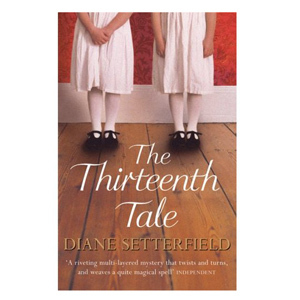
The Thirteenth Tale by Diane Setterfield
I should point out that mom did a great review of this book four years ago and I agree with everything she said. So I'll only add a few personal reflections.
This is a great ghost story, but not of the frightening variety. It's more about the secrets families keep from outsiders and also from each other. Although, in the case of The Thirteenth Tale there is a real "ghost" which keeps the story moving forward quite nicely.
I cared about both Margaret and Vida immediately, which made this an easy book to get into and stick with. The narrative doesn't let up until the very last page and even then, I wanted more. Also, the setting on the English moors was the perfect place to spend several rainy summer days being entertained by this delightful, engrossing tale.
Highly recommend.
Subscribe to:
Posts (Atom)


.jpg)