Tuesday, November 11, 2014

The Valley of Amazement by Amy Tan


"Was the painting meant to depict a feeling of hope or was it hopelessness?...The painting reminded me of those illusions that changed as you turned them upside down or sideways."


If you enjoy books that transport you into another time, place and culture then I think you will enjoy Amy Tan's most recent novel, The Valley of Amazement. However, if you're anything like me, you might think the title sounds a little too 'fantastic' at first. I actually avoided reading the book for that reason, when it was first published, even though I have enjoyed three of Amy Tan's earlier novels (The Joy Luck Club, The Kitchen God's Wife, and The Bonesetter's Daughter). Trust me, the title really is essential to the plot..

Amy Tan is a master storyteller- her language and prose are simply beautiful- and her novels always contains plenty of historically accurate details and context. I enjoy books that fill in the gaps of my knowledge and this one certainly did. I learned so much about the inner workings of finest courtesan houses of old Shanghai as well as, the political and cultural upheaval that enveloped China as the country transitioned from an imperial dynasty to a Republic.

The major themes here deal with the complex nature of mother-daughter relationships, love, betrayal, family secrets and the search for identity. I found the characters to be well-developed, credible and memorable. I should caution you, however, that there's a fair amount of explicit sexual content within these pages. And while it is appropriate within the context of the story, some readers might find it offensive; others might think it's tantalizing.

The story begins in 1912 in Shanghai and ends forty years later. The narrator, Violet is the half Chinese daughter of an American woman who also happens to be the madam of one of the finest courtesan houses in Shanghai. In the opening paragraph,Violet says, "When I was seven I knew exactly who I was: a thoroughly American girl by race, manners and speech, whose mother, LuLu Mintern, was the only white woman who owned a first-class courtesan house in Shanghai." Such certainty was soon disrupted when Violet is abruptly separated from her mother and her whole world is turned upside down. And so begins Violet's heartbreaking journey of self-discovery, survival and reconciliation. If you like stories about strong, resourceful and clever women you will love the women in this book. 

At 600 pages this book is not a light read, nor is it quick, but I thoroughly enjoyed it and think it's one of Amy Tan's best so far.

Saturday, November 08, 2014

The Light Between Oceans by M. L. Stedman

     The Light Between Oceans is about a man, Tom, who served in World War I and returns to Australia broken by the horrors of war. He feels guilt because he is alive while so many others aren't, and remorse for the things he had to do to survive the battlefield. He gets a job as a lighthouse keeper on Janus Rock, off the western coast, and meets a young woman who becomes his bride while on shore leave.
     Unfortunately, his wife Isabel, suffers a series of miscarriages that casts a dark shadow over their lives. It's on the heels of her third lost pregnancy that a boat washes ashore. There is a live baby and a dead man aboard. Out of desperation and grief, Isabel convinces Tom that they should keep the baby, a "gift from God." The rest of the story follows their lives and how their secret unfolds, casting it's net over friends, family, and strangers alike.
     This is a debut novel and it's very well done. I enjoyed descriptions of life on the lighthouse. Steadman deftly conveys the complications and contradictions of the human heart and leaves the reader wondering what they would have done in Isabel or Tom's place. I'll need to sit a while with this one, because there was a lot of meaning woven into each character's history and backstory.
     Overall, I'd recommend this one. It's an interesting treatise on lost people and how we can be found by others, how we can start anew. Also, if you don't feel up to reading but the story sounds interesting, just wait a bit. It's in production at Dreamworks Studio, starring Michael Fassbender and Rachel Weisz, to drop a few names...ahem.

Thursday, November 06, 2014

Bunker Hill by Nathaniel Philbrick

Some of our understanding of history may be similar to Bluto Blutarski's rant in "Animal House" about who attacked Pearl Harbor.  When it comes to the battle of Bunker Hill most of us know it began at the beginning of the American Revolution and that's about it.  If you want the politics, social pressures and sometimes a day by day account of the time from just before to a bit after that fateful battle, this book is for you.

If you are not familiar with Philbrick, a number of his books have focused on New England, from the Pilgrim's colonization of the area to the whaling ship that was the basis for the story of Moby Dick.  He tends to give about as much detail as he can find on the event in a reasonably good narrative that can sometimes be a little much but at other times is quite compelling.  This book is no different.

He presents a theory that neither the Boston Massacre nor Lexington and Concord should be considered the beginning of the revolution, but the battle called Bunker Hill, even though most of the battle itself was on an adjacent rise called Breed's Hill.  Since he gives a good account of the events leading up to the massacre and then each major event thereafter, you can make your own conclusion. I think he makes his case and gives a very good understanding of why each event occurred,  its degree of importance at the time, and the longer term effect it had on the colonies and their slow merging into a nation.

When we learn of these type of things in school, the events seem to plod along with a certain inevitability and are conducted by individuals painted only in black and white.  In Philbrick's telling, the British just want the colonists of New England to dial it back a bit and did so by treating the North Americans with much more leniency and understanding than was the case with their other colonies.  In turn, the colonists who pushed the matter into revolution were not purely idealists but individuals for whom almost any degree of control or outside government was too much.  The revolution's success was not a foregone conclusion, but the events at the very beginning of the revolution set the country up for possible success.  It's a worthwhile read.

Tuesday, November 04, 2014

Complications A Surgeon's Notes on an Imperfect Science by Atul Gawande

Dr. Gawande presents an unvarnished account of doctors learning and practicing medicine in this relatively short book ( 252 pages in paperback). He hits on many topics but arranges them into three broad categories; fallibility, mystery, and uncertainty.  We all want our surgeons to be infallible, understand everything they are dealing with and certain of their diagnosis and technique. In chapter after lucid and compelling chapter, we understand how doctors learn yet can never fully understand the workings of the body and how they decline with age or condition. Each chapter is a true story of a medical situation and some of them, especially the ones about what we don't understand about how the body works, go beyond interesting to fascinating. 
Given our society's litigious culture when it comes to poor outcomes in medicine, this is a most unexpected book from any medical doctor, let alone a practicing surgeon.  We know medical procedures can be less than perfect and yet it is seldom discussed in other than adversarial language. All of us interact with doctors over time and should view them rationally, yet part of the doctor's ability to heal rests with our faith in expecting a positive outcome from whatever it is they do.  I'm in a book club of retirees, and some have had serious health issues over the years.  I thought I'd recommend this book as one of our monthly selections, then changed my mind.  Not because it's not very good (it is quite good) but because it may be a little too good when discussing a topic most of us would just as soon not think about too much.  Having said that, I'd still recommend it to everyone.  You will still trust your doctor, you'll just do it with eyes more open.


Friday, October 24, 2014

"Gone Girl" by Gillian Flynn

So, I don’t really know how to review this book without completely giving it all away to those who haven’t yet read it. But OHMYGOD. That’s my review. OHMYGOD.

I will say this: dad, don’t ever read this book, you’ll hate everyone. CB, read it before we see the movie so we can both compare and contrast. Also, it’s been torture living with you for the last four days and not telling you every twist and turn.

Quick read, really compelling and MESSED UP twists. I have to hand it to the writer, she definitely knew how to make everyone be like “wait, WHAT?”, but in the best way possible.


I give it an A for story and storytelling, an F for F’d up.

Monday, October 13, 2014

Lawrence In Arabia by Scott Anderson

Prior to reading this book, the only thing I knew about T. E. Lawrence was Peter O'Toole's portrayal in the movie. What I didn't get from the film was an understanding of the context of his participation in the shaping of the Arabian world after WWI and why we have the situations we have today in that region.  This book fills those gaps in an outstanding fashion.
The world prior to WWI was carved up by European powers trying to create global empires.  That conflict helped create interlocking defense treaties that created the cascade into WWI.  Once the fighting started, the phenomenally stupid military decisions by the British and French helped create the massive carnage that ensued and effected the approach taken in fighting the Ottoman Empire that had allied itself after the start of conflicts with Germany.

T. E. Lawrence was an academic with a strong interest in Syria, in what is now Iraq to the east, Lebanon to the west and north, and all lands bracketed by those borders flowing south to the Sinai and Saudi Peninsulas.  He became a spy and a champion for the Arab cause for independence. Coincidental to that movement was the Zionist movement to create a homeland in the ill-defined region called Palestine.  Lawrence knew that the English and French consistently lied to leading Arabs and Zionists about their chances in having independent states and he did all he could to help the Arabs, sometimes to include acts of treason.

Once WWI ended, the English and French ignored all promises, carved up the region and tried to continue with business as usual in having global empires.  Palestine had been promised to both the Arabs and the Jews.  After WWII, the state of Israel was created and slowly the English and French imperial regions reverted back to different factions within the Arab world.

This description makes the book sound as if it could be dry reading and that's not the case.  There are a lot of players and it gets complicated sometimes sorting them out, but it's as much a spy story and rousing war story as it is a look at a very complicated man who wrote his own book "Seven Pillars of Wisdom" which played fast and loose with some of the facts.  Mr. Anderson's book does a terrific job of bringing clarity to what went on then and how it still effects us now.  A great read and worth tackling the 500 plus pages.

Tuesday, August 19, 2014

Hard-Boiled Wonderland And The End Of The World by Haruki Murakami

Becky and I both like Murakami, but for those who have not tried one of his many books, be prepared for a walk on the different side.  The Wind-Up Bird Chronicle , A Wild Sheep Chase and What I Talk About When I Talk About Running appear elsewhere in the blog and they can give you an idea of Mr. Murakami's take on writing and existence.

In this story, a man has a unique gift to be able to encode and later decode data in his head as the latest form of encryption and is employed by a Japanese firm to handle sensitive data for clients.  He goes to a new client and encounters a genius scientist who has him encrypt some data that could lead to the end of the world if it is not returned to the scientist's lab by a certain time.

In a parallel story, a man enters a walled community, has his shadow removed, and takes up the task of translating the information within the sculls of dead beasts who are part of the community.  Pretty straightforward story so far, if you're Murakami.

These two stories run in parallel throughout the book and you sense they seem to be on some trail of convergence.  Could be.  Of course, in the first story, there are obstacles to the man returning the data in time, what with men from who-knows-where trying to retrieve artifacts and intimidate him into ill-defined action.  If this description is somewhat vague, it's by design.  Murakami stories are part science fiction, part existential musing, with interesting character development and excellent writing.  They are both witty and dark at the same time, while still providing a compelling story and much food for thought.  To describe in more detail some of what happens to our man would spoil a wonderful reading experience. I've read all but the story on running that appears in the blog (I will read that one soon) and think this one is the best one yet. Give it a try even if it seems a stretch.

Thursday, August 07, 2014

Hunting Shadows by Charles Todd

One hundred years ago this month, a minor nobleman was shot, cascading to WWI, which resulted in 15 million deaths, including at least 880,000 for England alone.  For those who saw long time in the trenches but survived, the experience made a lasting mark on their lives.

The Inspector Rutledge series focuses on a man who survived four years in the trenches but is haunted by the ghost of one of his men whose death is the fault of the inspector.  Rutledge now works for Scotland Yard but marches to his own drummer when solving cases.

This particular case starts with the killing of an English officer, followed by another killing whose relationship to the first is unclear.  Rutledge is called in to take over the investigation from local officials and makes no more headway than those officials, at least initially.  He is a dogged investigator, and his dead sergeant provides enough commentary to keep Rutledge from overlooking that which may be below the surface, but is germane.  The case takes a while to start to come together but feels like it is what a real investigator might encounter when looking into a crime by a skilled and intelligent criminal.

Charles Todd is a a mother/son team, both of whom are writers with interests in different eras of English history, among others.  They live in the U.S., but the story resonates with a felt authenticity for the post-WWI era.  The story itself is well plotted, the characters realistic, and when you get to the end and look back at all that has been described, there are no holes although there are a few red herrings.  This sounds like damning with faint praise and that is not the case.  I intend to go back to the first book in the series and read them all.  It's an excellent addition to crime fiction and a cut above most that I've read in quite a while.

Monday, August 04, 2014

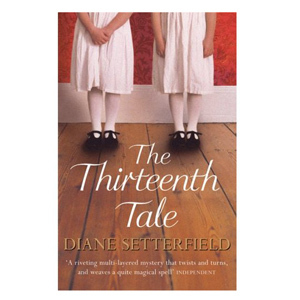
The Thirteenth Tale by Diane Setterfield


I should point out that mom did a great review of this book four years ago and I agree with everything she said. So I'll only add a few personal reflections.

This is a great ghost story, but not of the frightening variety. It's more about the secrets families keep from outsiders and also from each other. Although, in the case of The Thirteenth Tale there is a real "ghost" which keeps the story moving forward quite nicely. 

I cared about both Margaret and Vida immediately, which made this an easy book to get into and stick with. The narrative doesn't let up until the very last page and even then, I wanted more. Also, the setting on the English moors was the perfect place to spend several rainy summer days being entertained by this delightful, engrossing tale.

Highly recommend.


Saturday, August 02, 2014

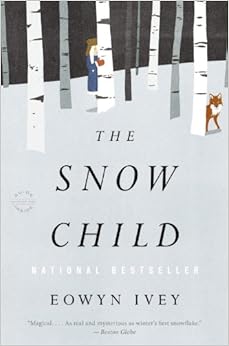
The Snow Child by Eowyn Ivey


The prodigal daughter is back to the book blog! I know, I know. I've been gone the longest time.  Truth be told, I just wasn't reading fiction. I don't know what got into me, but my brain just said "no" every time I tried to delve into a new story. But I was at the library last week to pick up some picture books for my class when my eye was drawn to the cover of The Snow Child, propped up in a hopeful manner on the Staff Recommends book display.

I stopped.

I read the back cover.

I snatched it into my bag like the treasure it turned out to be.

It took me about three or four days to read this quiet story. The quiet comes from all the snow (it's set in the Alaskan frontier wilderness of the 1920's) and the gentle way Ivey's story gently draws you in. Jack and Mabel are an older childless couple who have moved to Alaska to rely upon the company of each other and escape the judging glances of polite society. But a melancholy and regret tugs at both of their hearts for the child they lost so long ago.

One night, in an uncharacteristic playful romp in the season's first snow, they fashion a beautiful snow child with bright red gloves and cap. The next morning she's gone but footprints lead away towards the forest, forcing reader and characters alike to ask difficult questions about what is real and what is fantasy, where wild begins and humanity ends. So many times while reading this book I stopped to pause and gaze off, turning a contradiction around in my mind, trying to puzzle it through. I confess I found no solid answers which is why I want someone else to read this book so I have someone to talk to about it. But be warned...it's a book that will get me talking fast and confused and happy....prepare thyself.

I only found out after reading this debut novel that it was nominated for a 2013 Pulitzer. It didn't win, which means The Orphan Master's Son must be a real gem - The Snow Child was near-perfect in my book.

Please, when someone reads this, let me know. I can't wait to discuss.

And I'm glad to be back.

Ahem. 

Sunday, July 27, 2014

Jonathan Strange & Mr. Norrell by Susanna Clarke

This may take a little longer than usual, possibly because the book is longer than most we've reviewed (846 pages) and because it is very good with flaws.

The concept is that magic was widely practiced in the British Isles in ancient times but had fallen into a mere academic study by the early 19th century.  Mr. Norrell, a recluse living in rural England, decides to reinvigorate English magic, but really wants to be the only English magician, thwarting all others from engaging in the practice.  He is successful in actually producing some pretty good magical outcomes, but is so hesitant to take on wide spread practical magic that it quickly becomes frustrating to both the characters in the book and to the reader.  A second man, Jonathan Strange, comes on the scene who seems to have a greater gift for magic but must use different means to learn the craft since Norrell has horded all the books.  Norrell uses the help of a Fairy to solve a difficult problem which introduces a great deal of difficulty to those who received the help, as well as those around them.  There you have well over the first 200 pages.

The book is suffused with the manners and mores of the gentry and nobility of that time and there's subtle satire throughout the book to that effect.  However, do not think this is Pride & Prejudice meets Harry Potter.  It is written in the style of P&P, with a leisurely telling of different social situations interspersed with real action.  There were those who wanted to start their own version of Hogwarts, but Norrel wouldn't let them.

When researching what others said about this book, there were many reviews ranging from 5 to 1 star, most in the upper range, and all the points were accurate.  Each chapter is well written and can stand alone but the arc of the plot is choppy and is less compelling until the middle.  From there, the book becomes more compelling because there are enough people to care about who need help, and there is enough magic to possibly resolve the issues, that the somewhat disjointed plot can be overlooked.  I found myself reading larger and larger portions of the book at each sitting.  The story does not conclude as much as it just ends, but at a satisfy point.  You sense that the characters will go on, but to what end is anyone's guess.

The sense of the disjointed, almost insane world that belongs to the Fairy kingdoms can be compared to those described in "The Book of Lost Things" by John Connolly.  Although I could not find it in scanning Connolly's book, I'm sure one of the stories within JS&N also appears there.  Since both authors are from the British Isles, perhaps it is a story known in British folk lore.  If you like "The Book of Lost Things" you probably will like this.  Ms. Clarke's story is highly inventive and clever and she is an excellent writer.  I'm not sure editing the story down a hundred pages or so would be right for this book, unlike each of the Potter books, but I had started this book years ago and put it down somewhere around the 200 page mark.  I'm glad I went past that point this time.  Of the family, only Amanda would be interested in this.

Thursday, July 17, 2014

Spies Of The Balkans by Alan Furst

Alan Furst is one of the best writers for portraying spies working just before and at the beginning of WWII.  You could not go wrong in picking up any of his novels and this 2010 addition is a great story well told.  In a Greek port city, a policeman is selected to handle special cases that need great care.  He is good at his job but he and the rest of Greece watch uneasily as Hitler starts taking over its neighbors country by country. Meanwhile, Italy is looking for somewhere to go to show they have the right stuff to be another country to be feared in Europe.  It is only a mater of time before Italy tries to invade and Costa Zannis, our subtle detective, gets drawn into all the complications associated with helping refugees out of Germany, preparing for the hesitance, and weeding out German spies.

Whenever you read an Alan Furst novel, you get the feeling that these are real people, not superheros, who are dealing with difficult situations as best they can and that the story easily could have happened like this.  In this instance, the story moves right along, builds good suspense without dragging out the situation and has a satisfying ending.  It's a great summer read.

Tuesday, June 24, 2014

The Unlikely Pilgrimage of Harold Fry by Rachel Joyce

A journey of discovery can make for a very satisfying read, with the journey itself normally being more important than the end goal.  I think a boy traveling down a big river with a runaway slave on a raft was my first encounter with the genre; this version is almost the other side of the coin.

Harold is retired, repressed, and for all practical matters alone, even though he still lives with his wife.  He has lived a mostly unremarkable, unnoticed existence when a letter comes from a friend from work who has been gone for twenty years telling him that the friend has cancer.  After writing the lamest of short letters in response, he starts to mail the letter but keeps going to the next mail box, and then the next, ruing his inability to give a better response to one of the few people he could ever think of as a friend.  With the clothes he is wearing when he left the house, including a pair of boat shoes, he decides he can prolong his friend's life by walking the length of England to see her.

The results are a story of discovery about himself, his marriage, his family, people in general and the possibility of redemption.  It is sad to see someone live most of their life in fear and repression and I felt bad for Harold any number of times, yet his growth, which was not always happy, made for a satisfying and ultimately uplifting story. It should only take about 10 hours to finish the book and you'll want to keep coming back to see how he's doing.  I'm glad I met him.


Wednesday, June 18, 2014

The Goldfinch by Donna Tartt

The reading of this book was a family affair, as is the plot of the book itself.  Amanda gave the book to Jackie for Christmas, she loved it and passed it on.  If only such relatively placid family goings-on could have been the case with the book's main character. We meet him as a middle school kid living with his mom in Manhattan.  They love each other and have a nice life, even though dad is out of the picture and other relatives don't care. He has a few minor behavior issues, like most 13 year old kids, and it involves a trip to the school administrators for a discussion.  The events that follow change his life, and what a life.  He moves from pillar to post.  When you think you know where his life is going, circumstances change, often in a big way, and he adjusts, though probably in ways many of us would not choose.  Given the events in his life, he does alright, but more importantly, it opens the reader to worlds outside our purview and a plot that is satisfying in its depth, warmth, breadth, and skill.

When a book can win the Pulitzer Prize and also be a best seller for quite a while, you know you've run into a rare story.  It's a long book (766 pages in hard cover) yet one you can read at 40 to 50 pages at a sitting because it is so well written and the story so compelling.  Critics are now arguing if it's a great book, in the college literature sense of the meaning.  I can't say, but it is a wonderful read and a book I'll remember for a long time.

Wednesday, June 04, 2014

The Daughters Of Mars by Thomas Keneally


If you are looking for a light breezy summer beach read this is probably NOT the book for you. However, if you enjoy well-researched historical fiction with characters you will like and admire then I highly recommend The Daughters Of Mars. The Australian writer, Thomas Keneally best known for his Booker Prize winning novel, Schindler's List, has written yet another beautiful, poignant and simply unforgettable story.

This is a book about two Australian sisters, both trained nurses, who enlist in support of the Australian war effort during the early days of World War I. Naomi and Sally Durance are both eager to leave rural New South Wales following their mother's prolonged, painful death from cancer and set out on an extraordinary four year journey- from Cairo to Gallipoli and on the Western Front of Europe-where they are propelled onto a course of self-discovery unlike anything they could have ever imagined for themselves.

Whereas most war stories are told from the perspective of the soldiers experience, Keneally opts to tell this one through the lens of the noncombatants- the doctors, the nurses, and the orderlies- who waited behind the front lines ready to treat and comfort the wounded, the dying and the horribly maimed soldiers of The Great War. The new heavy weaponry, poisonous gases and rampant disease, including a pandemic flu in 1918, created widespread carnage that simply overwhelmed the best known and available medical treatments of that time. The writing is descriptive, vivid, masterful and clearly well-researched. This book is a real page turner- it's suspenseful, emotional and utterly inspiring. 


Monday, May 26, 2014

The Black-Eyed Blonde by Benjamin Black

The previous post is about the character Philip Marlowe by the late author Raymond Chandler.  Mr. Chandler may no longer be with us, but Philip Marlowe lives.  Mr. Chandler's estate authorized the Booker Prize-winning author John Banville, who writes detective fiction under the pen name Benjamin Black, to create another in the Philip Marlowe series, and he has done a great job.

Wise cracking, heavy smoking, hard drinking Marlowe is again on a case full of misdirection, beautiful women, connected people getting away with murder, and much else in a very satisfying sequel in the series.  It's a little later in time from his earlier books but the L.A. area hasn't changed now that they're into the 1950's.  A high class blond with jet black eyes walks into his office with the desire to find a boyfriend who has gone missing.  Sounds a little fishy, but just for the sake of being able to see her again and the fact that he's between other cases, he starts to dive into the details.  As you would expect, the details seem to change over time and persons unknown also are looking for the missing boyfriend as well.  The motives of most of the people you meet are blurred or completely unknown but when revealed make sense.  The story moves right along and is satisfying both as a stand-alone book and a welcome return of a great character done with wit and good writing.  It's a good summer read, or anytime, really.  Enjoy.

Tuesday, May 20, 2014

"Farewell My Lovely" by Raymond Chandler

 It’s mid-May, at least according to the calendar, and summer may be coming, if not in northern Michigan, at least in New Jersey and places not touched by the last ice age.  It’s time to read a mystery. 

One of my all-time favorites is Farewell My Lovely by Raymond Chandler.  He’s one of the earliest and best creators of a hard-boiled detective, in this case Philip Marlowe.  Those detectives of the 30’s and 40’s were lonely men focused on solving a case while steering clear of the local police who were normally lazy and/or on the take.  Theft and murder were always involved but it just seemed somewhat less gruesome than what seems more the rule by today’s writers.  One thing that seems to jump out though is they smoked like chimneys and drank like fish.

In this story, Marlowe is on a dead end case when he spots a giant of a man, Moose Malloy, enter a night club looking for his girlfriend Velma.  She’s not there and Moose ends up killing the club owner.  The police aren’t that interested since the owner is black and Marlowe decides to look into it a little on his own.  This soon leads to a cast of shady characters who lie to, assault, seduce, drug and try to kill Marlowe.  It’s all done through Marlowe’s narrative of dry humor and snappy patter.  Since there were more novels featuring Marlowe we know he doesn’t die in this story, but the intent and fate of everyone else is not guessed until it happens.


Here’s another mystery.  Why suggest this book now?  Anyone who likes the genre and who hasn’t read this book should really pick it up over the summer, but the real answer will come in another post.  Enjoy. 

Friday, May 09, 2014

A History of the World in 100 objects by Neil MacGregor

This was a Christmas gift from Becky and I've been reading it between other books since then.  It is such a good read that I even discussed it briefly with one of Becky's friends at her bridal shower. Yep, it's my idea of a scintillating conversation.

Anyhow.... the BBC had a series of programs on objects within the British Museum and how they reflect aspects of human history and development.  The series was well received and issued as a book.  The discussion is segmented into twenty topics with each topic having five objects that have their own chapter of about 5 pages and one or more very good photos.  It spans the last 2 million years with such topics as Making Us Human (2,000,000 to 9000 BC), Ancient Pleasures, Modern Spice (AD 1 to 500), Tolerance and Intolerance (AD 1550 to 1700), and Mass Production and Mass Persuasion (AD 1780 to 1914).

What struck me most about this book is that no mater the object discussed, it is interesting because of the context it provides regarding our thinking and existing as individuals and societies over time.  I've always liked history to better understand just that insight and yet was continually offered information and perspective I'd not seen before. However, this is not a dry text book but a continuing series of very readable discussions.  It's as if you met a subject mater expert at a party who was a great teacher and within a few minutes, let you understand a thumbnail sketch into what they've spent a lifetime learning.

The book could probably be read in a week or two if you just read it alone but also fits in nicely when you only have brief openings of free time.  If you're at all interested in history, this is for you.

Friday, May 02, 2014

"How to be a Woman" by Caitlin Moran

“But, of course, you might be asking yourself, 'Am I a feminist? I might not be. I don't know! I still don't know what it is! I'm too knackered and confused to work it out. That curtain pole really still isn't up! I don't have time to work out if I am a women's libber! There seems to be a lot to it. WHAT DOES IT MEAN?'
I understand. 
So here is the quick way of working out if you're a feminist. Put your hand in your pants.a) Do you have a vagina? andb) Do you want to be in charge of it?If you said 'yes' to both, then congratulations! You're a feminist.” ― Caitlin Moran, How to Be a Woman
I picked up this book when I was at the airport a few weeks ago, waiting for a flight and desperately looking for something to pique my interest. So when I happened upon "How to be a Woman," I was pretty excited. First, because I'd heard and read a lot about it in the last few years (see the NY Times article here if you're interested in a review by someone who knows more than me). Also, you can pretty much get me to pick up any book that is quoted as being "the British version of Tina Fey's 'Bossypants.'" I mean, obviously.

So I must say that I probably dove into this book with pretty high expectations - we all know how I felt about Bossypants (or do we? Click here if you aren't sure...). And it's an unfair characterization to say I was disappointed. But if you read this expecting Bossypants, I think you might be a tad disappointed.

But let's back up. The only reason I'm even comparing it to that book in the first place is because it was mentioned on the cover! Don't mention it on the cover if you don't want me to compare! Unfair, publishing company, unfair.

Because, without that expectation, I think I would've walked away with a much more fair assessment. It was funny, interesting, dug into some topics about women that are sometimes, um, not something we really read about (outside of Cosmo, which is the worst) - like waxing, getting your period, and other really fun girl stuff!

Also, obviously CB was fighting me to read this book the whole time and cannot wait to read about a girl's coming of age in the UK in the 1980s.

I guess the overall feeling from me is that it's a good read, an important topic (feminism - and not being scared of that word for the love of God!), and really palatable. But it isn't something that I'd necessarily pass around to everyone I know (like I did with the aforementioned "Bossypants," whether people wanted me to or not).

I do think that mom and Amanda would enjoy this, if for no other reason than it's pretty relate-able if you do, in fact, possess female body parts. (sorry dad and CB!)

Pick it up. Read it. Let me know what you think.

Friday, April 25, 2014

"If You Ask Me (and of Course You Won't)

Um, duh. Of course I read Betty White's book a few years ago and of course I forgot to blog about it at that time. But since I have about 100 more pages of my other book left, I wanted to do this throwback in honor of my favorite Golden Girl (it's so hard to choose, don't hate me Dorothy, Blanche, and Sophia!)

I originally thought this would be a memoir akin to Tina Fey or Mindy Kaling or Tori Spelling - we know how I love me some celebrity memoirs. But this was slightly different. It was more just little vignettes of the life of this 92 year old legend, complete with her self-effacing, humble and kind charm on every page.

Obviously I'm a fan, and so perhaps I'm a bit biased. But I'd recommend this to anyone with a lazy afternoon who's looking to laugh to pick this up - and it doesn't hurt if you've ever liked something Betty (we're on a first name basis) has done.

Check it out and let me know what you think! (though pretty sure nobody in the family would read this because your love of all things Golden Girls is sorely lacking and we have lots of work to do in that department.)